
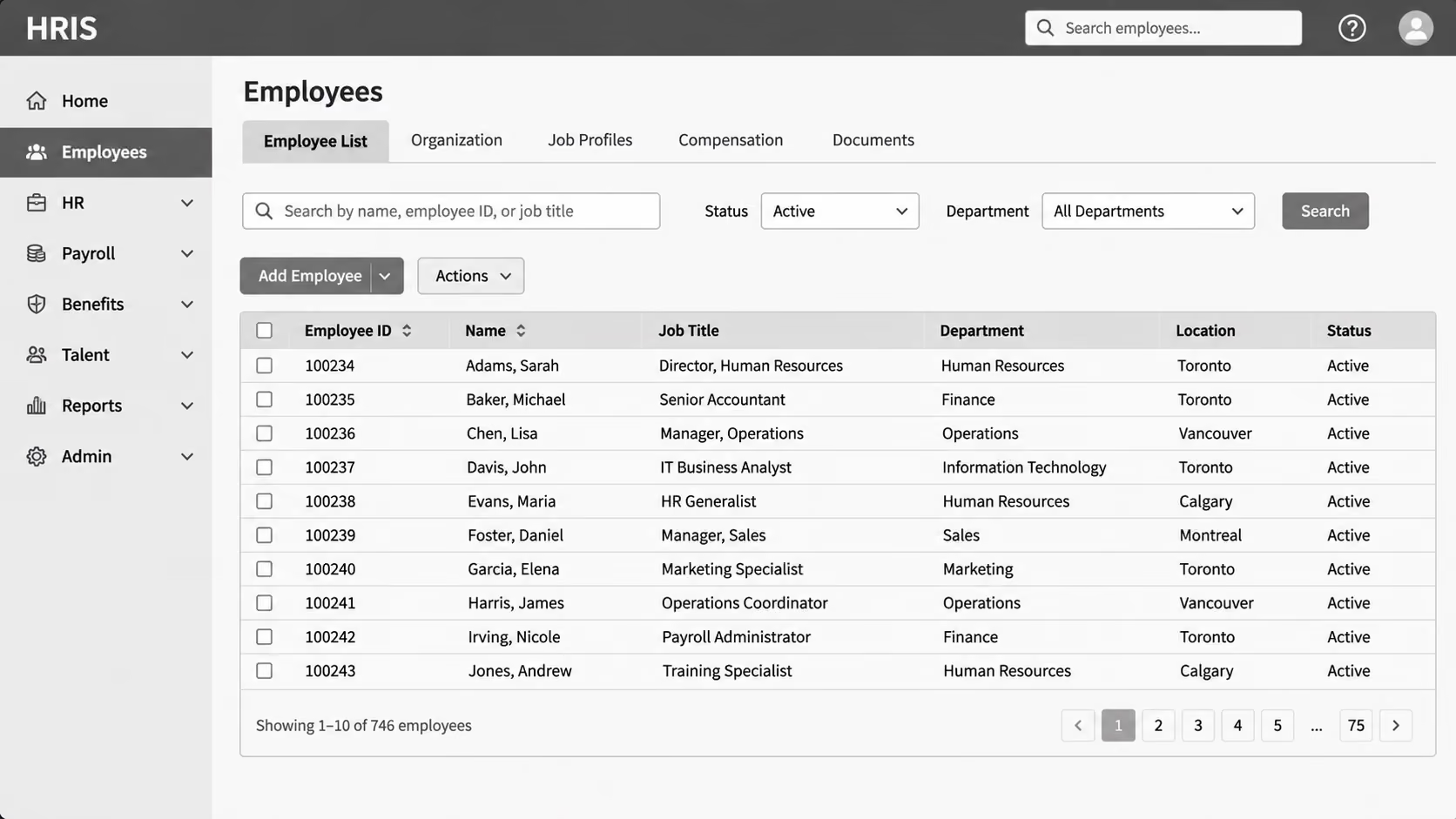
Your HRIS manages essential employee and workforce data, and may offer some succession planning capabilities. But as your program evolves, you'll need deeper visibility into leadership risk, successor readiness, and development progress.
Explore how HRIS platforms compare to purpose-built succession planning software like SuccessionHR, including key capabilities, benefits, and when to use them together.


You're only managing a handful of critical roles. Succession planning is managed entirely by HR, with potential replacements identified and tracked manually.
You have a limited need for talent insights. You don't require detailed analysis of successor readiness, leadership risk, or patterns across key roles and candidates.
You don't require additional customization. You're comfortable using your HRIS's built-in capabilities, including standard talent assessments like the 9-box grid, without the need for more tailored functionality.
Individual employee development plans are sufficient. You're tracking employee development but don't need to connect those activities to specific key roles or measure progress toward succession readiness.
Individual employee development plans are sufficient. You're tracking employee development but don't need to connect those activities to specific key roles or measure progress toward succession readiness.
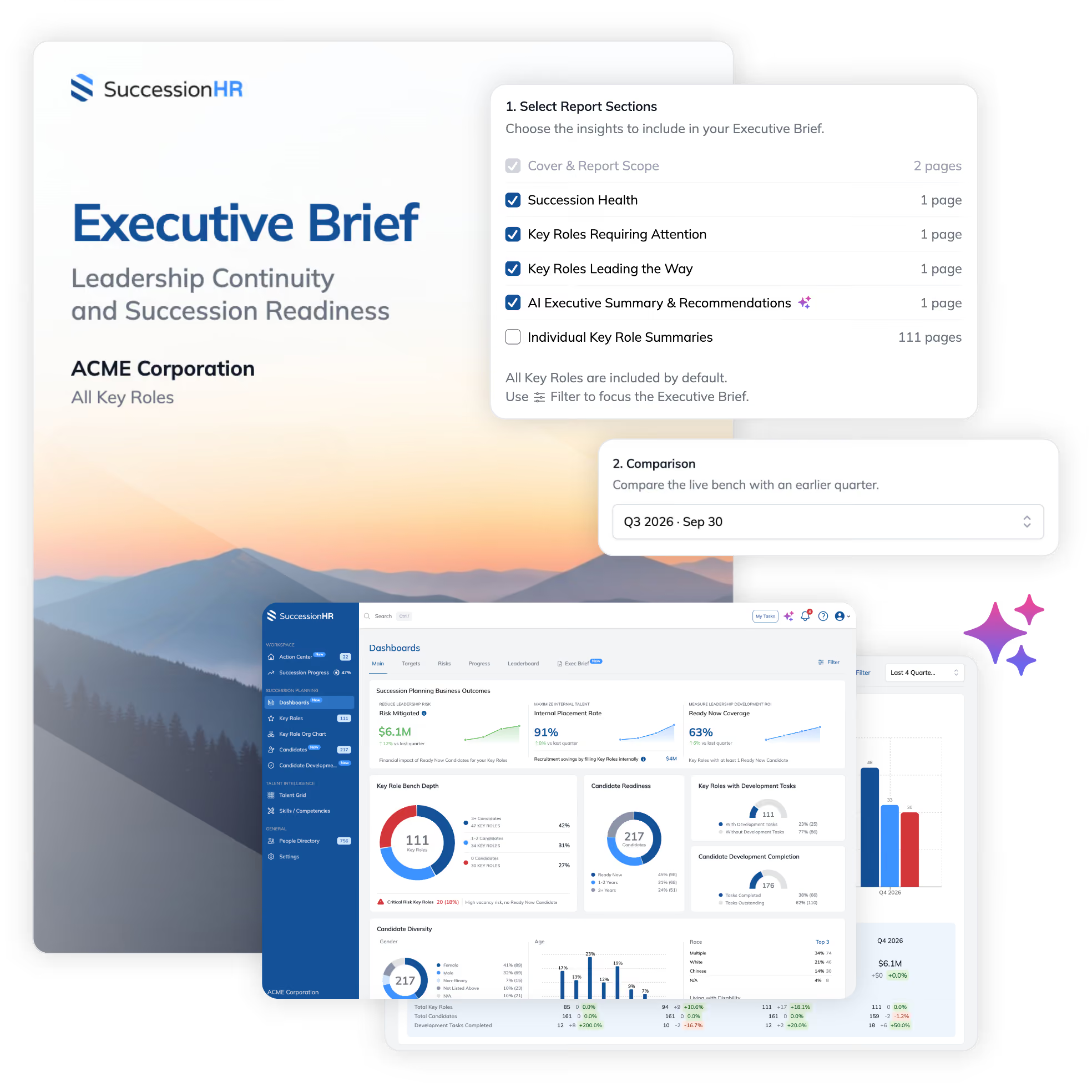
You need more meaningful succession reporting. Executives want visibility into bench strength, leadership risk, internal mobility, and development outcomes beyond standard HR reports.
Succession planning feels like an afterthought in your HRIS. Your system manages employee information effectively, but the tools available for succession planning don't fully support how your organization wants to operate.
You can't easily see where leadership risks exist. Identifying critical roles without ready successors or understanding gaps across your leadership bench requires additional analysis.
Successor readiness is difficult to track over time. You can identify potential successors, but understanding how their readiness is changing isn't straightforward.
Development plans aren't translating into measurable progress. You can document development activities, but it's difficult to connect those efforts to improvements in successor readiness.
Business leaders need to be more involved. Succession planning relies on HR to coordinate updates rather than giving leaders clear ownership of their plans.
Your succession process has outgrown your existing functionality. As more roles, candidates, and stakeholders become involved, you need a more consistent and scalable approach.
SuccessionHR is purpose-built succession planning software that helps organizations reduce leadership risk, maximize internal talent, and measure leadership development ROI.
Designed to complement your existing HRIS, SuccessionHR gives HR and business leaders dedicated tools to identify critical roles, assess successor readiness, track leadership development, and measure succession planning outcomes.
With integrations for leading HRIS platforms or the flexibility to operate as a standalone solution, SuccessionHR helps organizations strengthen their leadership bench and manage leadership continuity without replacing their existing HR technology.
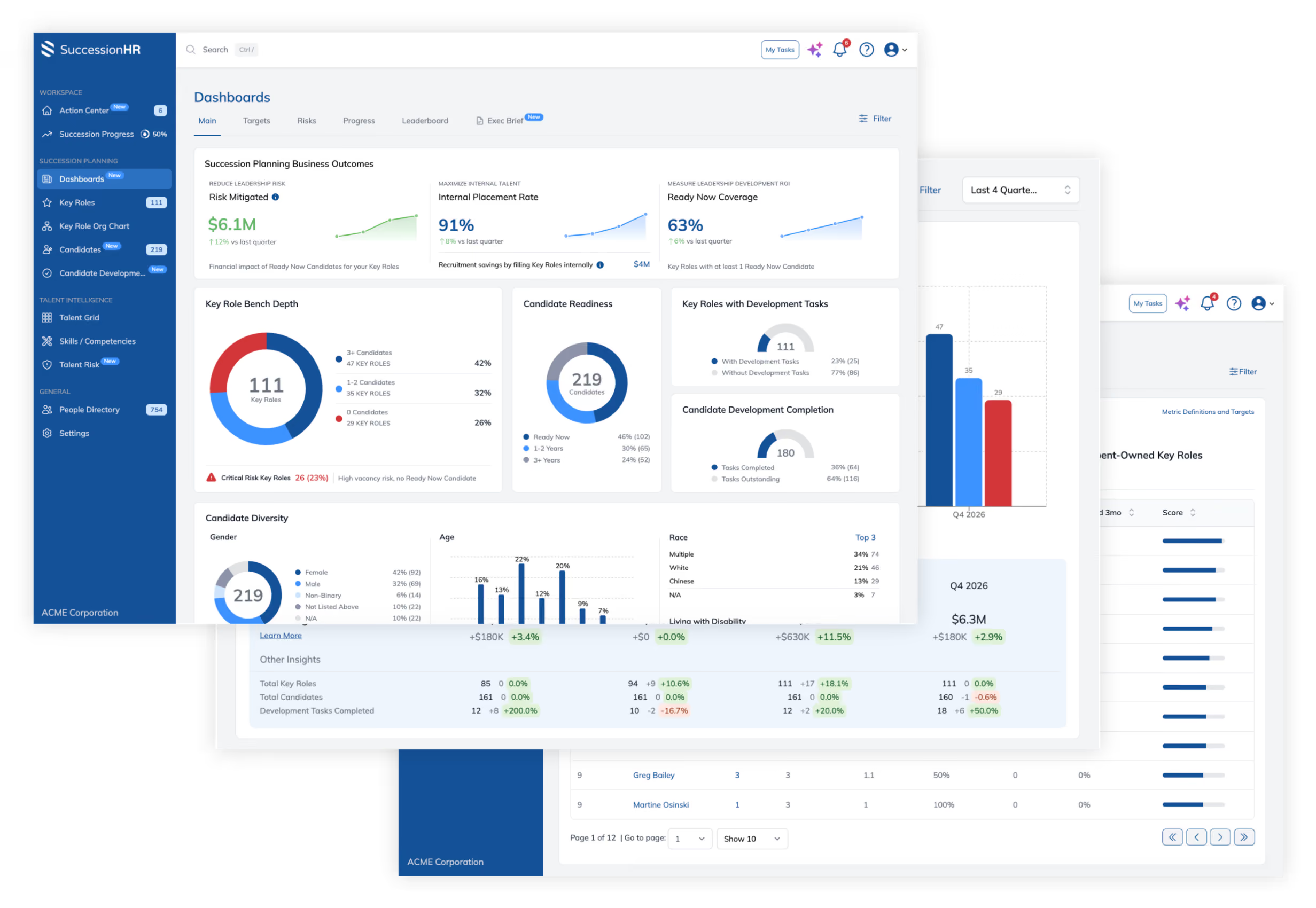
See how SuccessionHR can complement your existing HRIS with purpose-built tools for managing leadership risk, developing future leaders, and tracking successor readiness.


