
Excel is a familiar starting point for succession planning, but as programs grow, so do the challenges of managing successor readiness, tracking development, and identifying leadership risk.
Explore how Excel compares to purpose-built succession planning software like SuccessionHR, including key capabilities, benefits, and use cases.


You're managing a handful of critical roles. One person owns the spreadsheet, and keeping the information current is relatively straightforward.
Your succession planning process is still taking shape. Your immediate priority is identifying key roles and documenting potential successors.
You only review your plans occasionally. Annual updates are enough for your current needs, and there's little coordination required between stakeholders.
Your reporting needs are simple. A list of key roles, potential successors, and basic readiness assessments gives leadership the information they need.
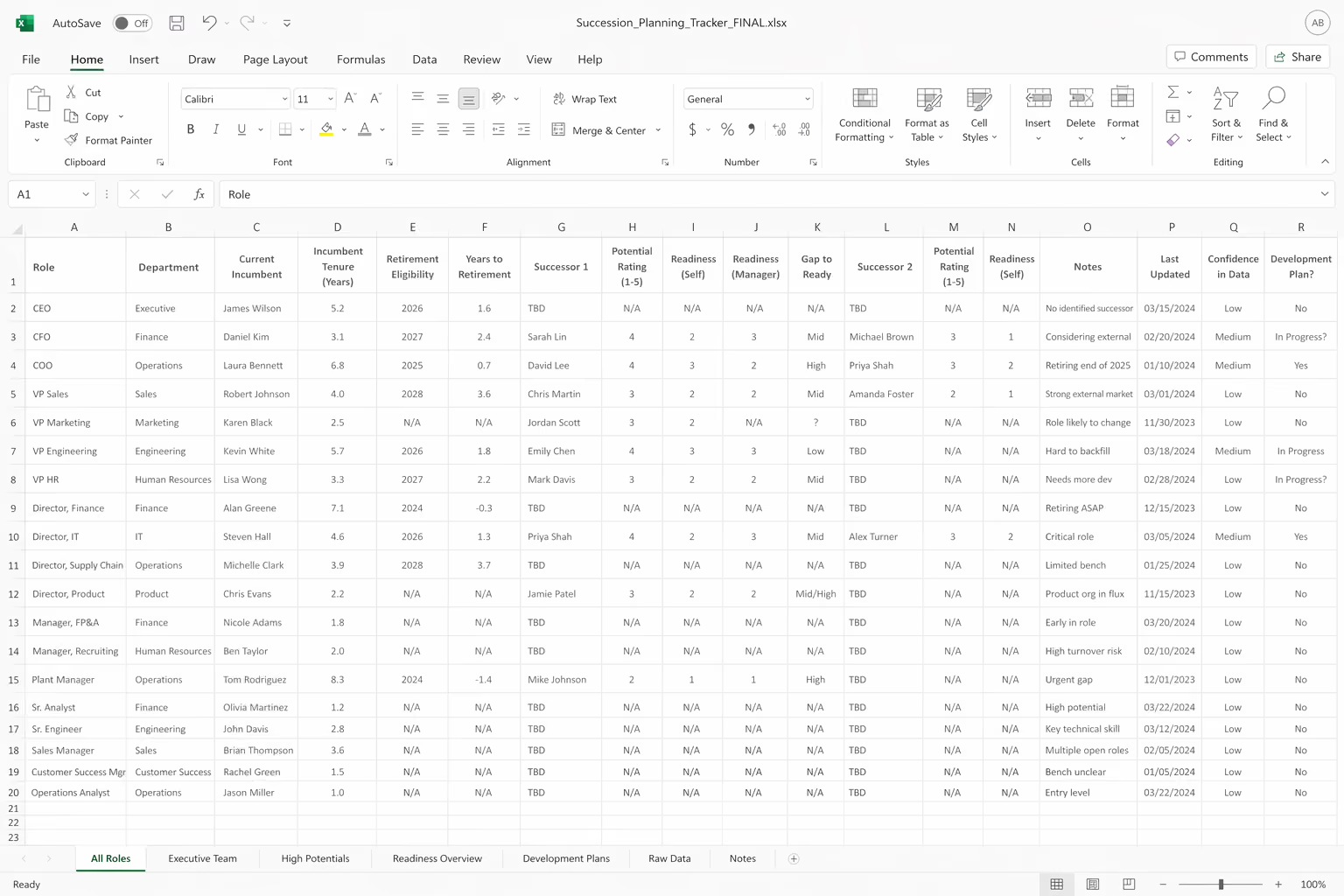
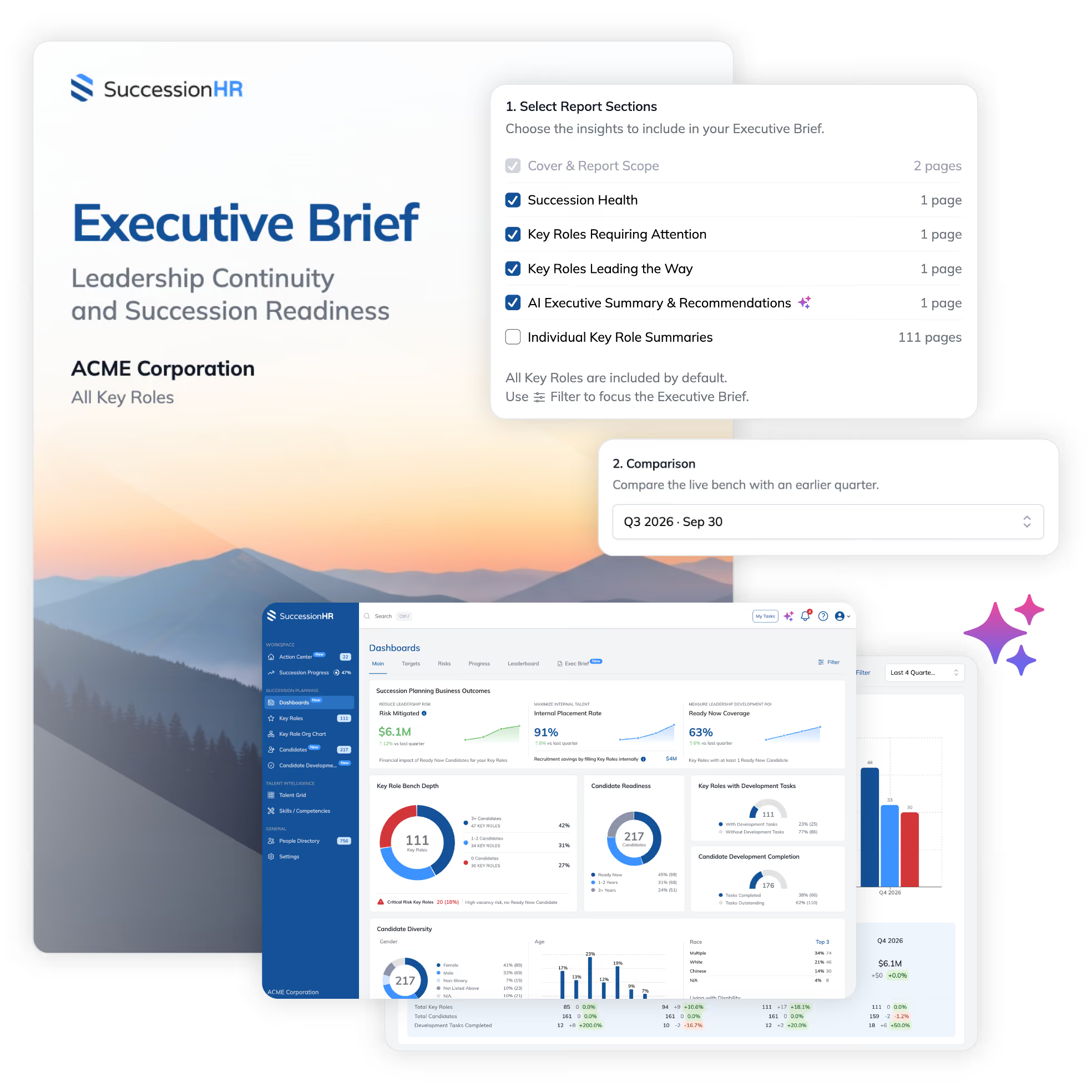
Executive reporting requires too much manual effort. You're spending hours compiling data and preparing presentations.
Keeping succession plans current is becoming a full-time task. You're spending more time collecting updates, consolidating spreadsheets, and preparing reports than acting on the information.
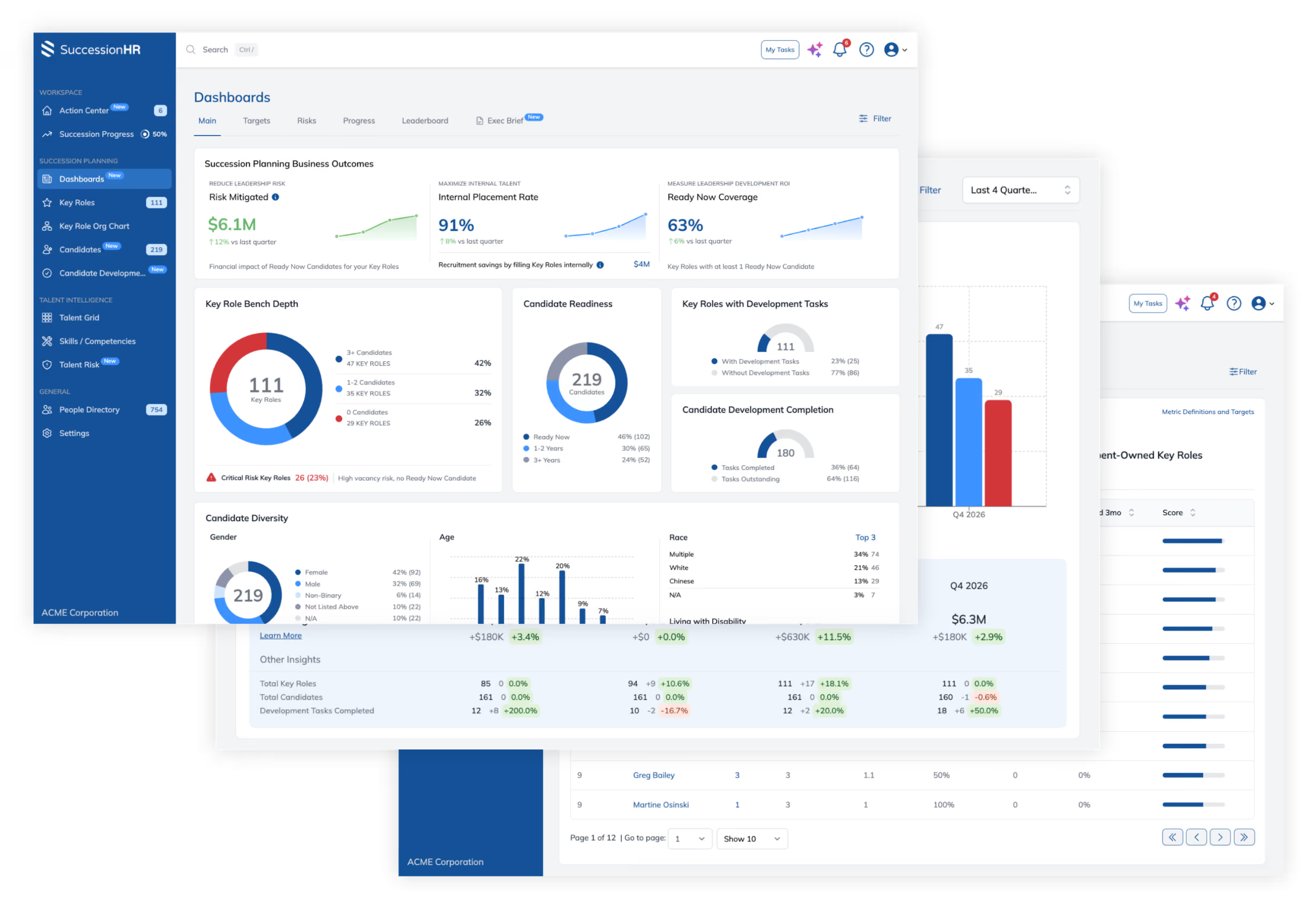
You can't easily see where leadership risks exist. It's difficult to identify which critical roles lack ready successors or where your leadership bench needs attention.
Business leaders need to be more involved. Succession planning depends on input from multiple departments, but HR is responsible for chasing updates and keeping everyone aligned.
Development plans aren't translating into measurable progress. You're tracking activities, but can't easily tell which candidates are becoming more prepared for future roles.
You need to demonstrate the impact of succession planning. Leadership wants to understand bench strength, internal mobility, readiness progression, and the results of development investments.
Your succession process needs to scale. More key roles, candidates, and stakeholders make it increasingly difficult to maintain a consistent approach across the organization.
SuccessionHR is purpose-built to help organizations strengthen leadership continuity, maximize internal talent, and measure the impact of their succession planning efforts.
Whether you're building your first formal succession program or looking to improve an established process, SuccessionHR provides the structure, visibility, and insights needed to make succession planning more effective.
See how SuccessionHR can help you spend less time managing succession planning data and more time preparing your future leaders.


